
From the moment we are born, we are aging. During our lifespan, we will also likely experience disability, whether that be aging with a disability or aging into disability.
The Wisconsin movement to reframe aging and disability affects all of us as we strive to tell a more accurate, whole, and healthy story of aging and disability.
In partnership with the Wisconsin Department of Health Services Bureau of Aging and Disability Resources, the Wisconsin Aging Advocacy Network, and Bader Philanthropies, the Wisconsin Institute for Healthy Aging is proud to support the Reframing Aging & Disability in Wisconsin movement through the creation of this information hub. It is Wisconsin’s one-stop shop for materials and resources that will help us meet our mission of ending ageism and ableism in Wisconsin.
Ageism: Ageism refers to the negative stereotypes (how we think), prejudice (how we feel) and discrimination (how we act) towards others or oneself based on age. Despite being a form of discrimination, ageism is often not taken seriously, and it is even considered one of the last socially acceptable prejudices. (World Health Organization, NIH)
Ableism: Ableism refers to the negative stereotypes, prejudice and discrimination towards others or oneself based on physical, intellectual, or psychiatric disabilities. At its heart, ableism is rooted in the assumption that disabled people require ‘fixing’ and defines people by their disability. (Access Living)
Reframing: Reframing is about the words we choose, what we focus on, and even what we leave unsaid to more accurately shape how people understand aging and disability.
What is Reframing?
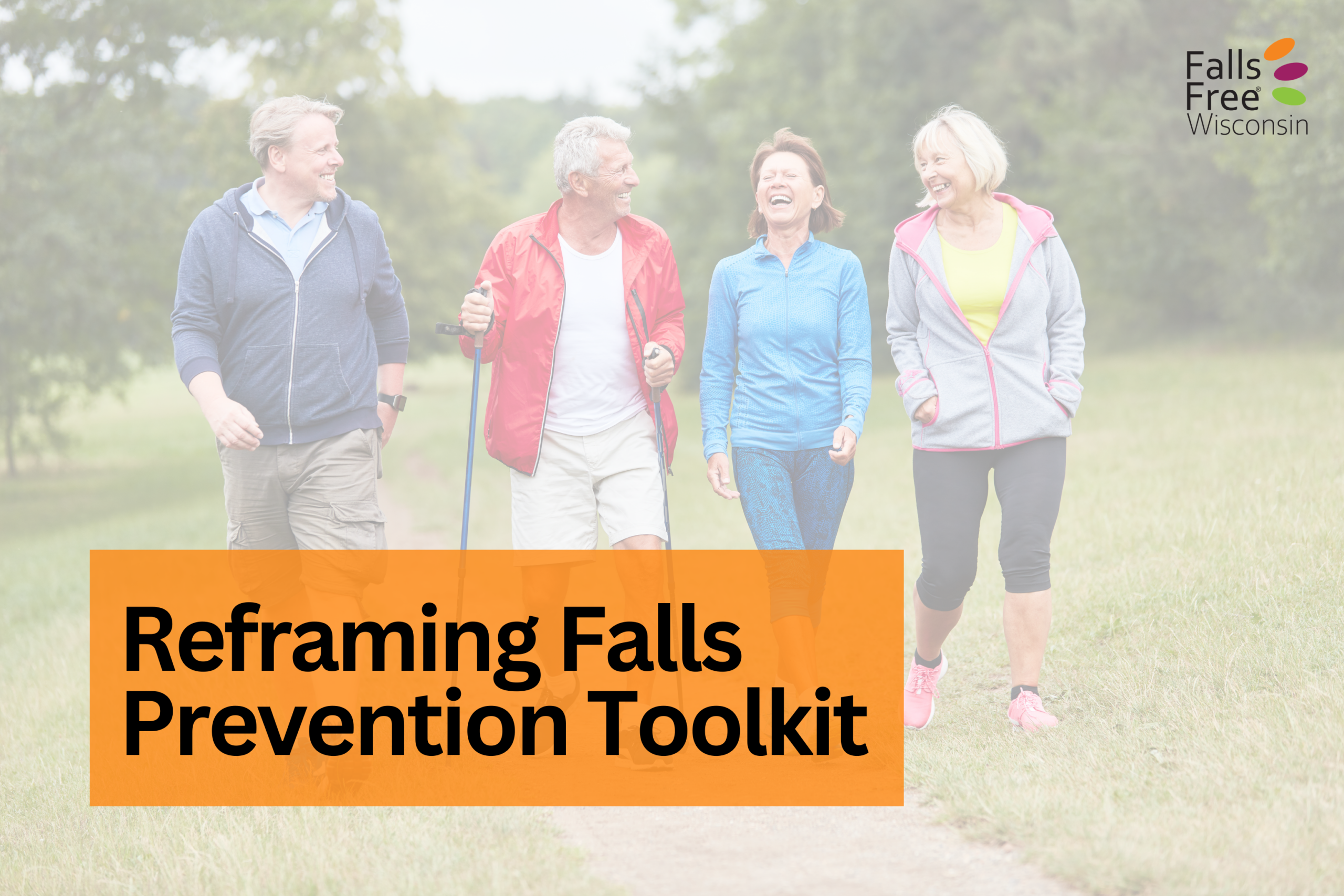
To understand reframing, here’s an example from a Falls Prevention Awareness Month Proclamation:
Pre-Framing: “WHEREAS; according to the Centers for Disease Control and Prevention (CDC), falls are the leading cause of injury-related death among older adults in the United States, with more than one in four adults aged 65 and older experiencing a fall each year, including many Wisconsinites”
Reframed: “WHEREAS; while falls can affect everyone across the lifespan, according to the Centers for Disease Control and Prevention (CDC), they are the leading cause of injury-related death among older adults in the United States”
What Changed? The revised statement begins with what we all share instead of what makes one group different. This invites everyone into the conversation while still emphasizing why falls prevention is especially important for older adults. It also avoids leading with a statistic that can make falls feel inevitable (fatalism), creating a more solutions-based mindset.
See additional examples under the dropdown below “Wisconsin Reframing Examples“
Resources
Content coming soon!
Wisconsin Resources
National Center for Reframing Aging Resources
Other Resources
Summit 2026: The Movement to Reframe Aging | September 16
The National Center to Reframe Aging presents Summit 2026, a one-day convening advancing a more accurate, inclusive, and impactful conversation about aging. The Summit brings together national leaders from government, research, philanthropy, business, communications, and community organizations to explore how reframing aging is influencing policy, strengthening partnerships, and driving innovation.
Summit 2026 offers a strategic opportunity to align your organization with a nationally recognized, research-based movement and connect with decision-makers and collaborators committed to shaping the future of aging.
ADILN Conference | Monday, September 21, 2026 from 1 – 5 p.m. | Reframing Fundamentals
This four-hour interactive workshop teaches participants the evidence-based principles of reframing aging and how to begin applying them in their work. Through guided exercises and practical application, participants learn why narrative change is critical and develop skills to make their communications more effective. Led by National Center to Reframe Aging staff and trained facilitators, it’s designed for up to 100 participants. For participants to successfully engage, they should have some baseline exposure to the movement to reframe aging (e.g., have attended at least one introductory presentation) and the ability to influence their organization’s communications.
Hannah Albers is passionate about building communities where all people can thrive at every age. As Director of Program Development at the National Center to Reframe Aging, she leads national efforts to improve the way we talk about aging, challenge ageism, and promote narratives that reflect the full value and potential of all of us as we age. Hannah guides the development of innovative programs, resources, and partnerships that help advocates, policymakers, and organizations across the country reframe conversations about aging. She’s a nationally recognized speaker and facilitator, known for translating research into practical strategies that inspire action and create lasting social change. Before joining the National Center, Hannah worked with a senior services organization, where she built expertise in project management, strategic planning, leadership development, and data analysis—and played a key role in launching a grant-making initiative focused on community based supports for older people. She holds a degree in International Business and Global Service from Valparaiso University.
Work Force
Gerontocracy
Content coming soon!
Join Us
Don’t leave change to chance – create it! Join the movement!
You are invited to join Wisconsin’s network of passionate leaders who seek to change the way our society thinks and talks about aging and disability.
With the advent of evidence-based framing strategies through the National Center to Reframe Aging (NCRA) and their research partner, the Frameworks Institute, industry leaders and advocates see an opportunity to make a meaningful impact on policies supporting all ages. While this initial work is focused on aging, there is relevance for the disability community, and advocates continue to seek out equally impactful resources that speak more directly to ableism. We are committed to addressing both ageism and ableism, as they are closely linked and can have a significant impact on quality of life.
The growing community includes community members, leaders, researchers, practitioners, educators, legislators, funders, and advocates who recognize we all have a role to play in advancing the movement to reframe aging and disability. Achieving meaningful cultural change requires a long-term commitment, beginning with the aging and disability field itself.
With leadership from the Wisconsin Aging Advocacy Network and the Wisconsin Department of Health Services, we are taking steps to advance effective communication strategies about aging. Part of our multi-faceted activities includes presentations and workshops from the National Center to Reframe Aging. These events will educate key Public Health and Aging Network leaders and partners about the concepts to reframe aging and teach us how to consistently apply the communication strategies as effective framers.
The community of practice takes place the 4th Wednesday of the month from 2 – 3 pm.
It is a safe place to receive support, advice, and to practice reframing. Do you have a document, PowerPoint, speech, etc. you are working on and want to get some input for age and disability productive framing?
Some people attend regularly. Others just come when they want advice or to listen. We are all learning together!
Please reach out to Jenna Sturgis (jenna.sturgis@dhs.wisconsin.gov) or Helen Sampson (helen.sampson@dhs.wisconsin.gov) if interested in attending, sharing, or learning together!
The Reframing Advisory Committee was established in 2024 to provide input, advice, and guidance to the Reframing Project Management Team through lived experience and professional expertise via monthly meetings and ad hoc participation. Members distribute relevant information through their individual networks and support the spread of training opportunities and the reframing movement. Advisory Committee members act as ambassadors for Reframing Aging and Disability in Wisconsin.